

Between Christmas and New Year’s, I received an unexpected email from the Department Chair of the college where I taught. At first, I honestly thought it was spam. The message simply said, “I need to talk with you about something concerning the instructional design program. Can you call me today, tomorrow, or Monday?”
It included her phone number, but because I’ve been targeted before with scam “please call me” messages—and because I had never actually spoken to her on the phone—I wasn’t sure it was legitimate. Our interactions had always been limited to occasional emails. Reaching out to the Department Chair was something I just didn’t need to do.
Instead of calling, I sent her a new email to confirm whether she really did want to speak.
She did.
When we finally connected, I learned that the university is no longer allowed to employ faculty who reside in Canada. As a result, my employment was terminated—after ten years of teaching there. I had moved back to Canada during COVID and continued teaching without issue, even receiving a promotion that guaranteed me work every semester.
I wasn’t the only one affected: a colleague was also let go. Because he didn’t have a continuing appointment, they were able to simply not renew his contract.
All of this happened just three weeks before classes were set to begin.
At first, I handled it well. I am sad not to be teaching—but the unexpected space in my life has given me more time for creative work: more writing, more energy for my podcast, and even space to develop a new podcast I hope to launch soon.
What I miss most, though, is knowing that I made a meaningful difference in people’s lives. That sense of contributing to someone’s growth is what I feel the loss of most deeply.
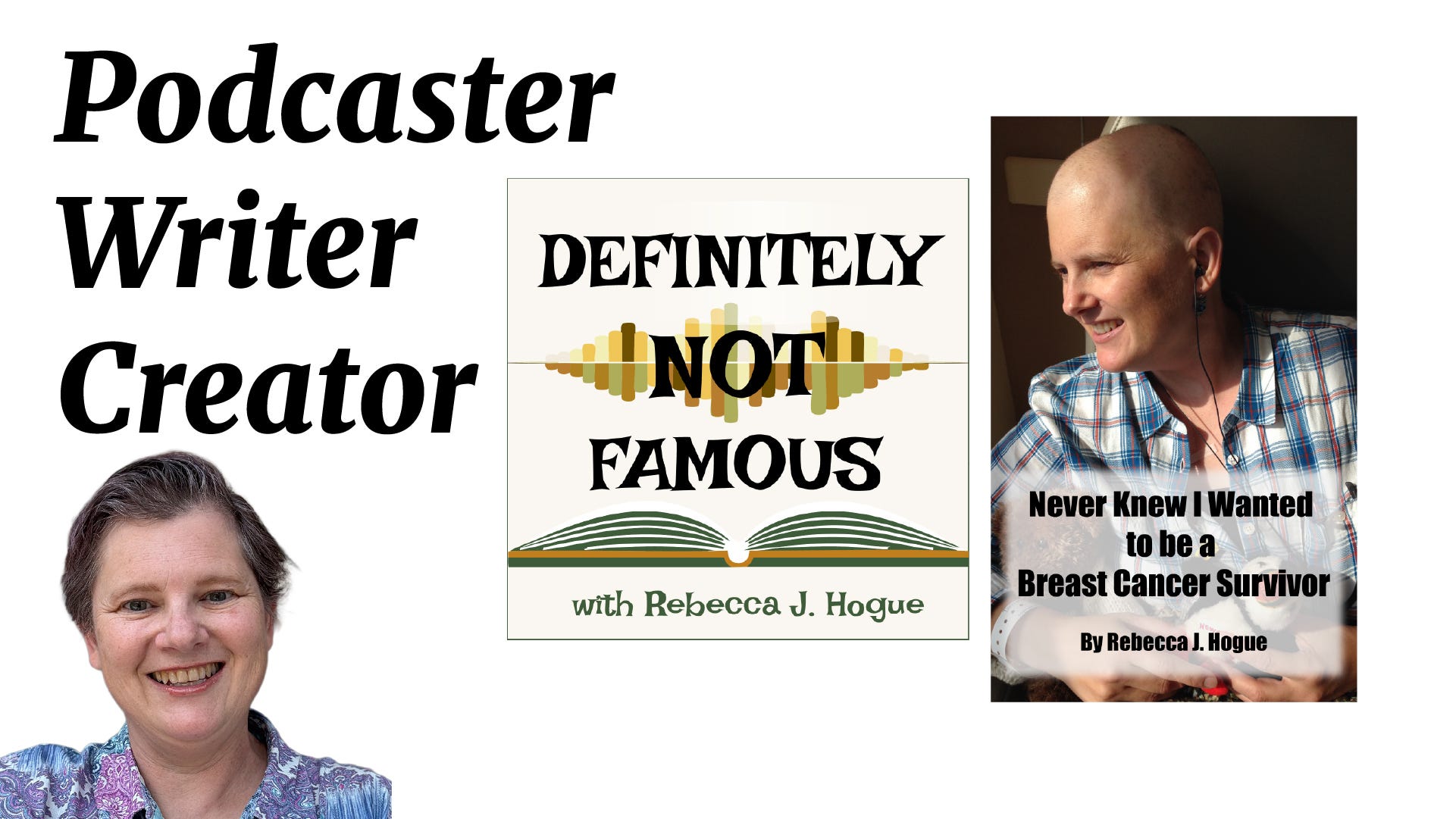
And that brings me to the idea of supporting artists—supporting me. I’ve recently learned that literary artists (like writers) and digital artists (including podcasters) can access grants and professional communities if they are recognized as professional artists. One of the criteria is being paid for your creative work.
Which leads me to Patreon.
I’ve created a Patreon page as a simple way for people who appreciate my work to offer a small financial contribution. I’m not looking for large amounts of money. Even a small one-time contribution tells me that the work I’m doing matters to someone—that it has an impact, that it resonates, that it makes a difference.
So my ask is this:
If my work has value for you, I would truly appreciate a small contribution on Patreon. And more broadly, I encourage you to support other artists whose work enriches your life. Whether it’s Patreon or another platform, even a small contribution can make difference in an artist’s life.